Most homeowners who ring asking for a tree removal actually need a tree pruning — and it costs about one-third the price. Here’s how to tell which one your tree really needs.
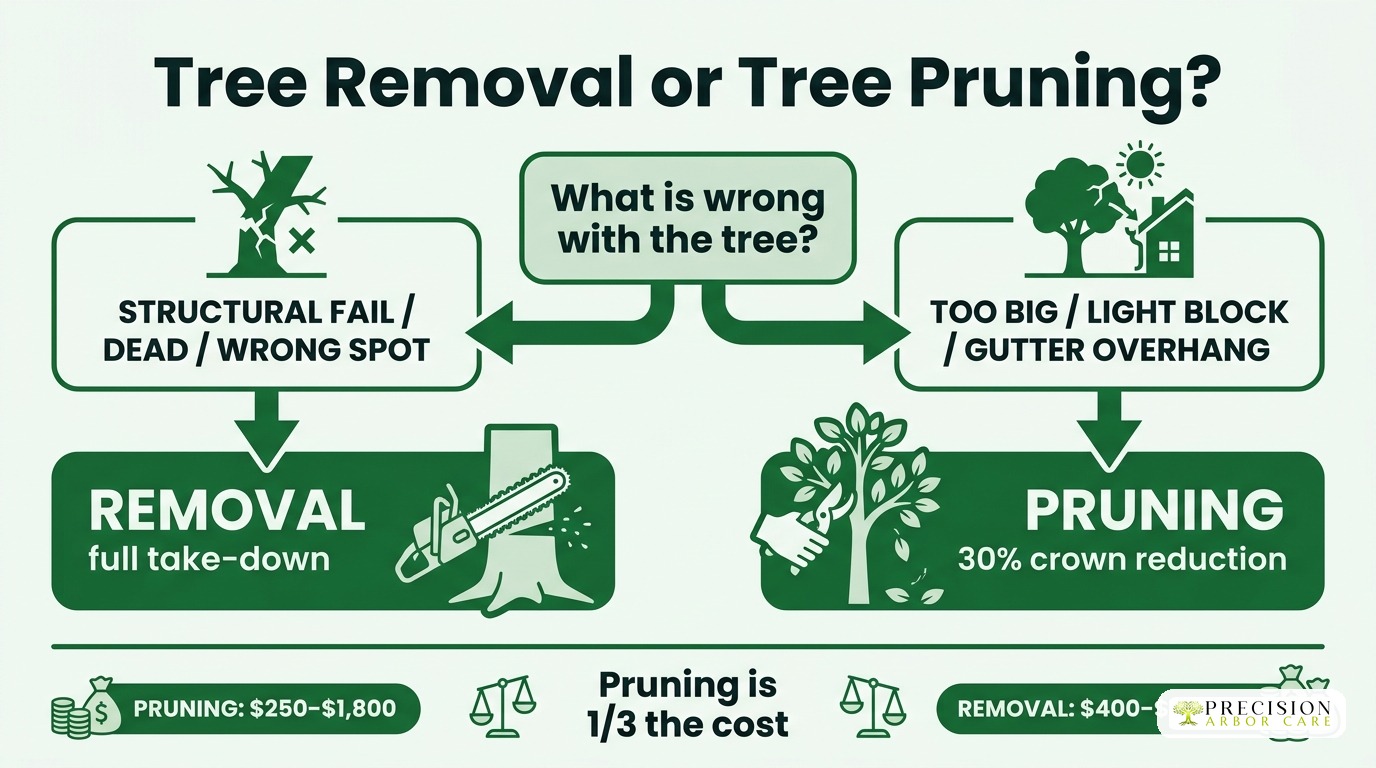
When Pruning Solves the Problem
If the issue is light blockage, gutter overhang, branches scraping the roof, or general "the tree’s gotten too big," pruning almost always solves it. A 30% crown reduction on a 12m Plane Tree visibly transforms it within a week. Cost: $600-$1,200. Removal of the same tree: $2,000-$3,500 plus $400-$800 for stump grinding.
When Removal Is the Right Call
Pruning won’t fix:
- Structural failure. Trunk decay, visible root plate lift, split trunks — these mean the tree is unstable regardless of canopy size.
- Wrong species for the spot. A Lemon Scented Gum 2m from your foundation is a problem pruning can’t solve.
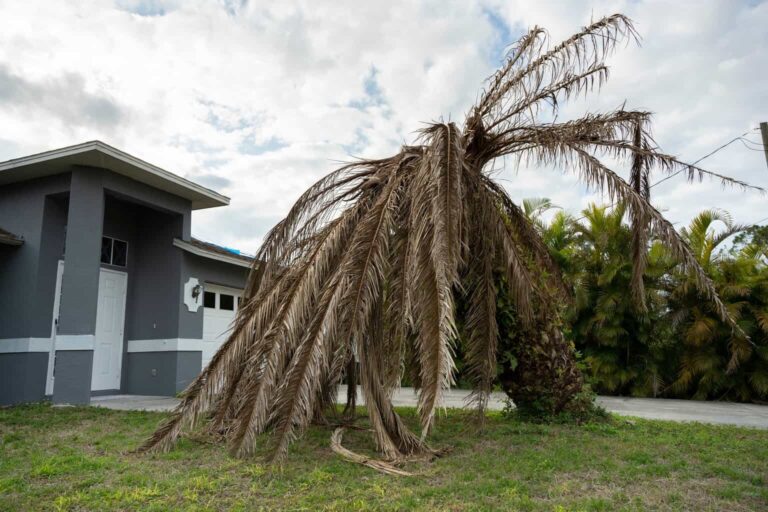
- Dead tree. Dead trees fail unpredictably. Insurance won’t cover damage if you knew it was dead. Always remove.
- Severe pest / disease damage. Some borers and fungal infections compromise the wood permanently.
- The tree is at risk to people or property AND can’t be made safe. Removal becomes the safest option.
The Cost Comparison
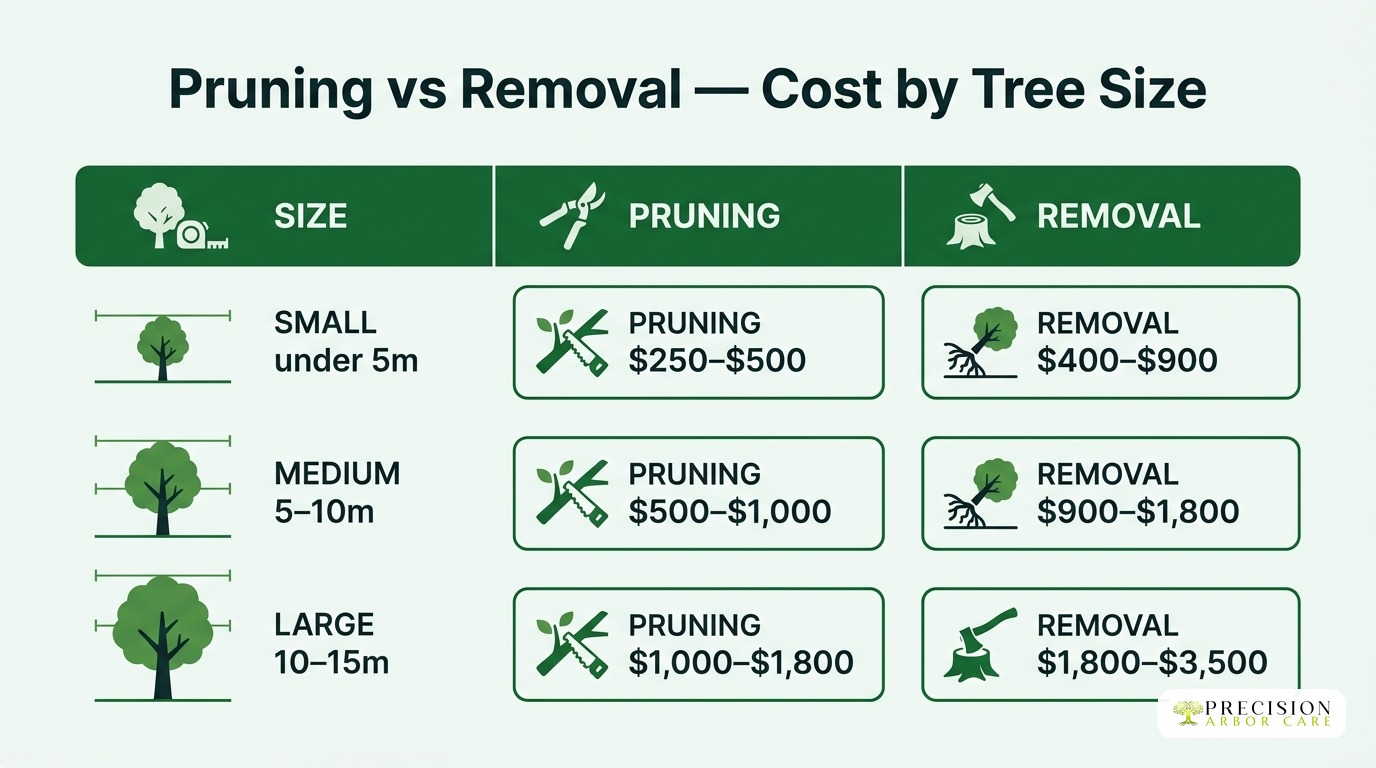
| Tree size | Pruning cost | Removal cost |
|---|---|---|
| Small (under 5m) | $250-$500 | $400-$900 |
| Medium (5-10m) | $500-$1,000 | $900-$1,800 |
| Large (10-15m) | $1,000-$1,800 | $1,800-$3,500 |
What We Recommend on a Site Visit
We assess every tree before quoting removal. If pruning would solve the same problem at one-third the cost, we’ll tell you. Removing a healthy mature tree is a 20-year decision — we don’t recommend it unless it’s genuinely needed.
The 5 Signs You Actually Need Removal (Not Pruning)
If any of these apply, removal becomes the right call regardless of how big or established the tree is. Pruning won’t fix them and may even accelerate failure.
- Trunk decay you can see. Bracket fungi growing from the trunk, hollow sound when knocked, or visible cavities. Internal decay compromises structural integrity and pruning doesn’t restore it [1].
- Root plate lift after rain. If the tree visibly shifts angle after a heavy rain or storm, the root system is failing. Pruning the canopy reduces wind load but the root failure continues.
- Wrong-species-for-the-spot. A Lemon Scented Gum 2m from your foundation will keep being a Lemon Scented Gum no matter how much we prune it. Some problems are species-spec, not size-spec.
- Severe pest or pathogen damage. Some borer infestations and fungal pathogens (Phytophthora, Armillaria) compromise the wood permanently. Pruning out infected wood can buy time but rarely solves it.
- It’s dead. Dead trees fail unpredictably. Insurance often won’t cover damage from a tree you knew was dead. Always remove [2].
Why Arborists Default to Pruning When It Works
We get more business by recommending removal — bigger jobs, more revenue per visit. So why do we default to pruning when it solves the problem? Three reasons:
Repeat work is better business than one-off work. A client who got pruned for $700 and was happy comes back every 3-5 years and refers neighbours. A client who got pushed into a $3,500 removal they didn’t need doesn’t come back.
Canopy is increasingly protected. Most Melbourne councils now resist removal applications for mature canopy trees. Pruning sails through, removal often needs an arborist report and arguments [3]. We’d rather do the pruning and skip the council fight.
20-year asset replacement is expensive. A mature tree provides shade, screening, property value, and biodiversity. Replacing it with a sapling sets the clock back to year zero. Pruning preserves the asset.
What 30% Crown Reduction Actually Looks Like
If we recommend a crown reduction, here’s what to expect visually. We don’t just lop the top off (that’s topping, which we don’t do under any circumstances). A 30% reduction means we shorten the longest branches back to a live lateral (a smaller branch growing at a healthy angle from the main one), maintaining the tree’s natural shape but reducing the overall canopy size by about a third.
For a 12m Plane Tree, that means the tree comes back to roughly 8.5-9m with a tighter, denser canopy outline. Within 6-12 months, the existing growth pads out and you can barely tell it was reduced. Within 3 years, you may need another light maintenance trim.
Real Cost Example: 12m Plane Tree on a Hawthorn Property
To make the trade-off concrete, here’s a real job we quoted in March 2026 on a Hawthorn property:
- The tree: 12m Plane Tree, 65cm trunk diameter, healthy but blocking light from a north-facing kitchen.
- Removal quote: $2,800 + $450 stump grinding = $3,250. 6-week council permit process.
- Pruning quote (30% reduction + crown lift): $980. No permit needed. Same-day work.
- Client decision: Pruning. Light returned to the kitchen within a week. They’ll re-quote in 3-4 years.
When pruning is the wrong call
Pruning can actually accelerate decline on trees with internal decay, severe lean, or root plate failure. We assess on-site before recommending it. If the tree won’t survive a meaningful reduction, we’ll say so.
Council Rules Favour Pruning
Across most Melbourne councils, the gap between "needs a permit" and "just go ahead" is much wider for pruning than for removal. Routine pruning of up to 10-15% of canopy generally doesn’t need a permit. Removal of any protected tree usually does, with arborist reports and potentially neighbour notification.
Even if a council approves a removal application, the process can take 4-12 weeks. Pruning bookings can usually happen within 1-2 weeks. If timing matters, pruning has another invisible advantage [3].
“Booked a removal quote and Rob arrived and immediately said ‘pruning will solve this for a third of the price’. He was right — kitchen has light again, tree is still there, we kept the bird life that nested in it.”
“Two other arborists quoted us $4,000+ for removal. Precision came out and said pruning was the answer at $1,100. The tree looks great a year later. Genuinely useful, honest advice.”
Keep reading
More tree removal guides
Curious what a quote looks like? See our tree removal cost guide and tree pruning service overview.
Related reading
- Our Tree Removal Melbourne page — full service overview.
- Tree Removal Cost Melbourne — goes deep on the specific topic.
Related service
Tree Pruning in Melbourne
If pruning solves the problem instead of removal, you save 2/3 of the cost and keep a 20-year asset. We’ll tell you on the on-site quote whether pruning is the right call.
Frequently Asked Questions
How do I know if my tree needs pruning or removal?
Can a tree be saved by pruning if it’s leaning?
Is crown reduction the same as topping?
How often does a tree need pruning?
Is it OK to prune in summer?
Sources
Ready when you are
Get a free, fixed tree removal quote — usually the same day
Rob calls back personally — usually the same day. We talk through the tree, book an on-site visit within 24-48 hours if it needs one, and give you a written, fixed-price quote with everything itemised. No surprises at the end.

Written by
Rob Tufuga
Founder & Lead Arborist, Precision Arbor Care
Rob has been climbing, cutting and shaping trees across Melbourne for more than 15 years. He started Precision Arbor Care to do tree work the way he always wished he could when he worked for bigger crews — one job at a time, no upselling, and an honest number on the quote.