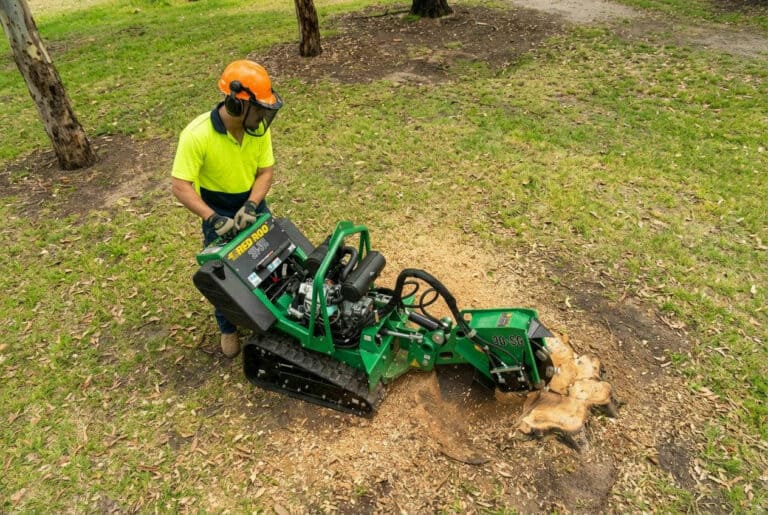
Stump grinding typically goes 15 to 30 centimetres below ground level. The exact depth depends on what you plan to do with the space afterwards — a quick patch of lawn needs less than a new garden bed, and a concrete slab or footing needs more again. This guide explains how deep the grind needs to be for each use case, what affects the price, and what happens to the roots that are left behind.
Standard Stump Grinding Depth
The industry standard is 15 to 20 centimetres below grade. At this depth, the surface is flat enough to cover with topsoil and lay new lawn, and you will not see any stump visible even after a few weeks of settling.
Most quotes include this standard depth. Deeper grinding costs more because it takes longer, creates more mulch, and puts more wear on the grinder.
Depth by Use Case
Lawn — 10 to 15 centimetres
If you just want grass to grow over the old stump, 10 to 15 centimetres is enough. You need enough depth to bring in topsoil, seed or turf, and have the roots system out of the way for mowing.
New Garden Bed — 20 to 30 centimetres
If you are planting flowers, shrubs, or a veggie patch in the same spot, go deeper. Twenty to 30 centimetres gives plant roots room to establish without hitting woody stump material.
Keep in mind: even after deep grinding, wood chips will remain in the soil. As they break down over 1-2 years, they pull nitrogen from the soil. You may need to add extra nitrogen fertiliser to compensate.
Planting a New Tree — 60 centimetres or more
Planting a new tree in the exact same spot needs the deepest grind possible. Some professionals recommend avoiding the same spot entirely because:
- Root disease from the previous tree can spread to the new one
- The decomposing mulch creates a spongy, nutrient-poor zone
- You need to remove the old root system almost entirely
If you must plant in the same spot, grind as deep as the machine allows, remove all the mulch, backfill with clean soil, and wait 6-12 months before planting.
Paving or Concrete — 30 centimetres minimum
If you plan to lay pavers, concrete, or a shed slab over the old stump, 30 centimetres minimum. The ground needs to be firm and stable so nothing settles or heaves as the remaining wood decomposes.
Some builders recommend excavating the remaining root system entirely for a slab. Ask your builder or engineer what depth they need before the grinding job.
Building Foundations — Full Removal
For a house extension, retaining wall, or any structural footing, grinding usually is not enough. The remaining stump material will rot over time and can cause settlement. A full stump excavation or removal is the safer option. See our guide on stump grinding vs stump removal for the difference.
Are the Tree Roots Removed?
No. Stump grinding removes the visible stump plus 15-30cm of the base and main roots beneath it. The lateral roots extending outward are left in the ground.
For most uses (lawn, garden, paving) this is fine. The roots decompose over 5-10 years and do not cause problems above ground. But if you need the area completely clean — for deep excavation, new tree planting, or utilities work — ask for full stump removal, not just grinding.
What Does Stump Grinding Cost at Each Depth?
Prices vary by stump diameter and depth. As a rough guide for Melbourne:
- Small stump (under 30cm diameter), standard depth: $120 to $180
- Medium stump (30-60cm), standard depth: $200 to $400
- Large stump (over 60cm), standard depth: $400 to $800+
- Extra depth (30cm+): Add 20-30% to the quote
- Multiple stumps: Per-stump cost usually drops 20-40% when done together
Get a clear quote that states the depth included. Some operators quote on a shallower depth to win the job, then charge extra once they start grinding.
What Affects the Grinding Depth Possible?
Not every stump can be ground to any depth. Factors that limit depth include:
- Rocky soil. The grinder teeth can hit rocks below the stump, damaging the machine and stopping the grind.
- Buried utilities. Water pipes, gas, electrical, or irrigation close to the stump limit safe depth. Call Dial Before You Dig (1100) before any deep stump work.
- Sloping ground. On slopes, depth is measured relative to the soil surface. One side may go deeper than the other.
- Machine size. Small residential grinders max out around 25cm depth. Larger tow-behind or tracked grinders can go 40cm or more.
- Access. If the stump is in a tight backyard, only a smaller grinder will fit through. That may limit how deep the operator can go.
How Long Does It Take?
A standard-depth grind takes:
- Small stump: 15-30 minutes
- Medium stump: 30-60 minutes
- Large stump: 1-3 hours
- Extra depth: Roughly double the time
Most residential jobs are done in half a day or less.
What Happens to the Grindings?
The grinder produces a pile of wood chip and soil mix. You have three options:
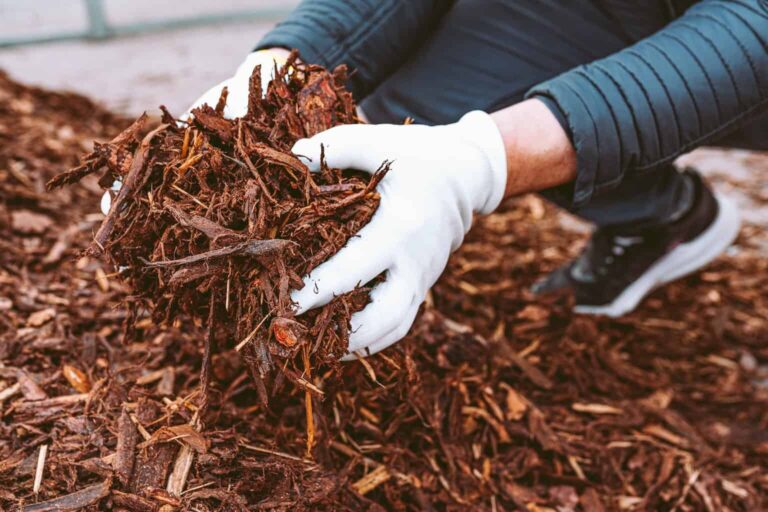
- Leave it on-site. Useful as mulch on garden beds. Free and saves a trip to the tip.
- Use it to backfill the hole. Refill the ground cavity so it does not look like a crater.
- Have it removed. Adds $50-150 to the job, but leaves you with a clean site ready for new turf or planting.
Most quotes include leaving the mulch on-site. Removal is usually a paid extra. See what to do with the mulch for more on this.
Get a Clear Quote With Depth Stated
When you ask for a stump grinding quote from Precision Arbor Care, we tell you upfront the depth included, what happens to the mulch, and any extras. We grind residential stumps across Greater Melbourne. Call Rob on 0413 606 544 or visit our stump removal services page for a quote.