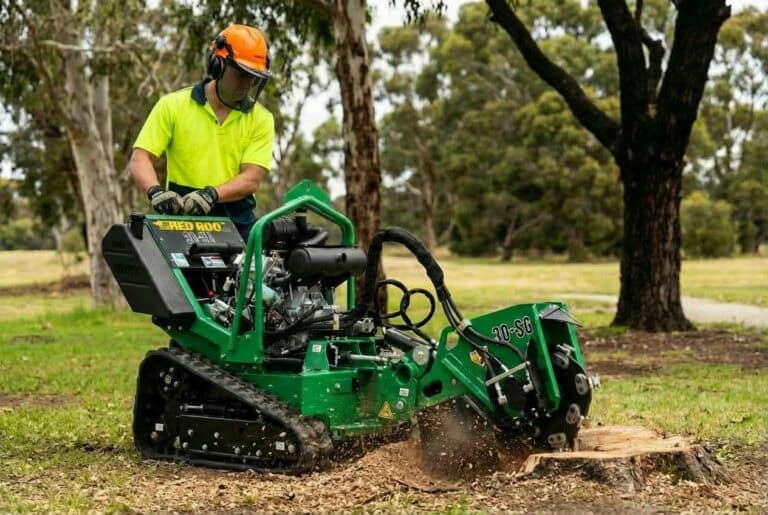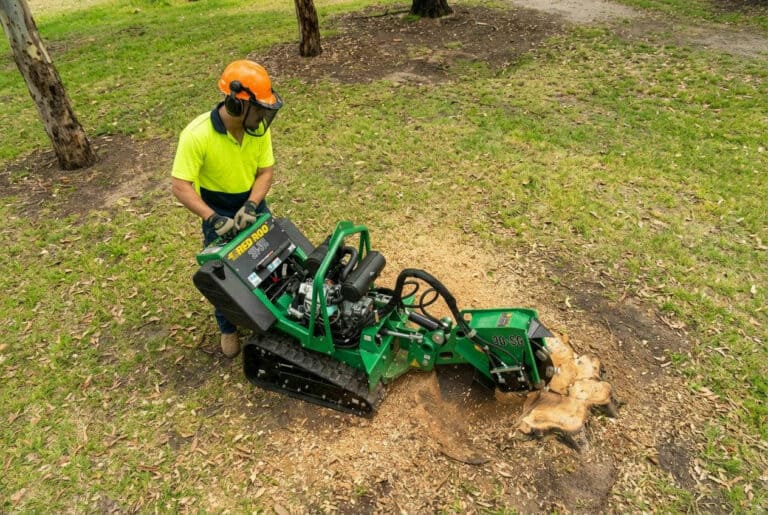
Stump grinding produces a pile of wood chips and soil — sometimes called “grindings” or stump mulch. A medium stump can generate half a wheelbarrow of material, and a large one much more. Here is what to do with it, whether you want to use it around your garden or have it removed.
How Much Mulch Does Stump Grinding Produce?
The volume depends on the stump’s size and how deep the grind goes. As a rough guide:
- Small stump (under 30cm): 1/4 to 1/2 a wheelbarrow
- Medium stump (30-60cm): 1/2 to 1 full wheelbarrow
- Large stump (over 60cm): 1 to 2 wheelbarrows or more
The mulch is a mix of fine wood chip and some soil from the grinding. It is fluffy when fresh but compacts down over a few weeks.
Option 1: Backfill the Hole
The simplest option is to use the mulch to fill the cavity left behind. The grinder leaves a roughly circular hollow where the stump used to be. Pushing the mulch back in gives a level surface almost straight away.
Tips for backfilling:
- Tamp the mulch down gently as you fill
- Top with 5-10cm of good topsoil if you want to plant lawn or garden on top
- Expect some settling over the next 6-12 months — top up with more soil as needed
Option 2: Use It as Garden Mulch
Fresh stump mulch works fine as mulch on garden beds. Just remember it is coarser and woodier than commercial mulch, so it breaks down more slowly.
Before you spread it:
- Let it rest for a few weeks. Fresh mulch can briefly “steal” nitrogen from the soil as it starts decomposing. Piling it up for 2-4 weeks helps avoid this.
- Add nitrogen when you spread it. A light sprinkle of blood and bone or a pelletised fertiliser counters the nitrogen draw.
- Keep it 5cm away from plant stems. Piling mulch against stems traps moisture and causes rot.
- Aim for 5-10cm deep on established beds. Deeper than 10cm and the soil underneath can go anaerobic.
Option 3: Use It on Pathways
Coarse stump mulch works well as a bark-chip pathway filler. It is rougher than commercial pine bark but has a natural look for informal garden paths.
For a path:
- Lay weed matting down first, especially if the path is long-term
- Add 5-8cm of mulch
- Top up every year or two as it breaks down
Option 4: Compost It
Stump mulch can go into a compost pile or bay, but it breaks down slowly on its own because it is high in carbon and low in nitrogen. Balance it out by mixing with:
- Grass clippings
- Kitchen scraps
- Coffee grounds
- Manure (chicken, cow, or sheep)
Turn the pile every few weeks. You will have usable compost in 6-12 months.
Option 5: Share It With Neighbours
If you cannot use all the mulch yourself, let neighbours know. Gardeners are often happy to take free mulch off your hands, especially for raised veggie beds, chicken coop bedding, or pathway filler.
Option 6: Have It Removed
If you do not want the mulch, most tree services will take it away for an extra fee. Typical cost:
- Small stump mulch removal: $40 to $80
- Medium stump: $60 to $120
- Large or multiple stumps: $120 to $250+
Ask for removal to be included in the original quote — some operators charge more if you decide after the grind is done.
What Not to Do with Stump Mulch
Do Not Use It on Veggie Beds Straight Away
Fresh mulch can hold residue from pest treatments or fungal pathogens from the old tree. Let it age for at least 3-6 months before using on food-producing beds.
Do Not Spread It Thickly Against House Walls
Wood mulch against a weatherboard, brick, or stone wall can hold moisture and attract termites. Keep any mulch at least 30cm from house walls and no more than 5cm deep near foundations.
Do Not Dump It in the Bush or Parkland
It is illegal to dump garden waste in public or private bushland. The mulch may also carry pests or diseases that can spread into native vegetation.
Do Not Use Mulch from Diseased Trees on Healthy Plants
If the original tree was removed because of disease (Armillaria, cypress canker, Phytophthora, etc), do not spread the mulch on healthy garden beds. Have it removed or composted hot (piles over 60°C) to kill pathogens.
Questions to Ask About the Mulch When Getting a Quote
- Is mulch removal included, or extra?
- Will the hole be backfilled with mulch, or left open?
- How much mulch is likely to be left on site?
- Will the area be raked level after the grind?
A clear answer upfront saves surprises. See our guide on grinding depth for more on what to expect, or stump grinding vs removal for the bigger picture.
Book Stump Grinding with Clear Scope
Precision Arbor Care’s quotes state the grind depth, what happens to the mulch, and whether cleanup is included. Call Rob on 0413 606 544 for a straightforward quote, or visit our stump removal page to learn more.