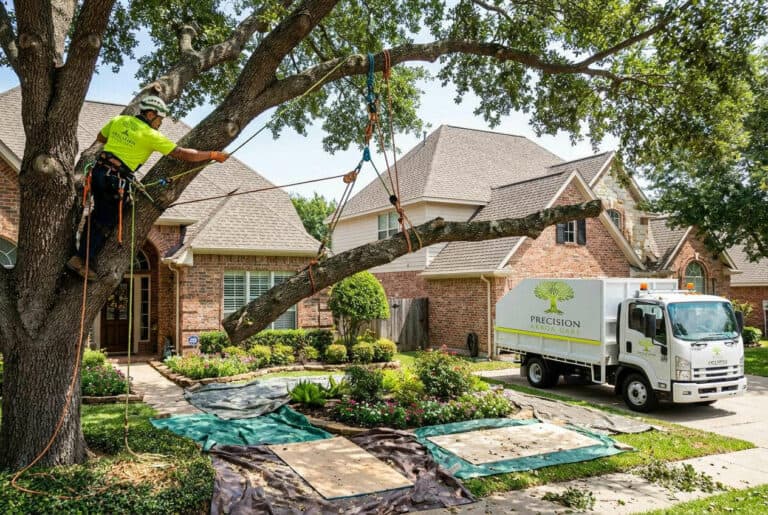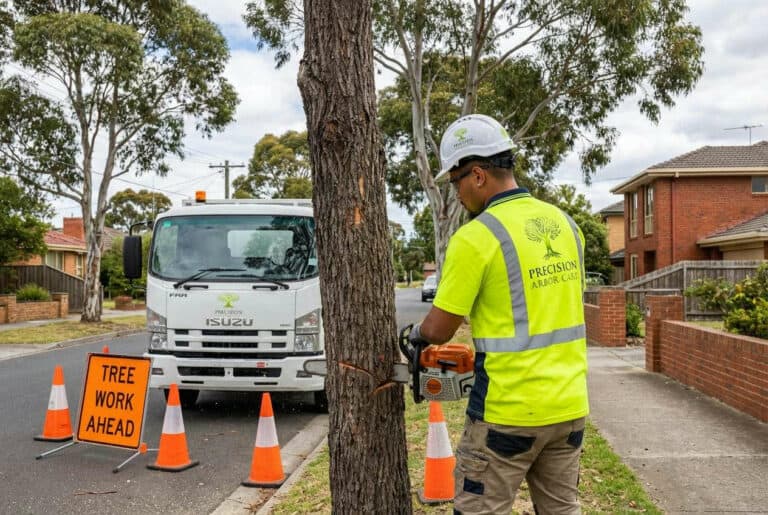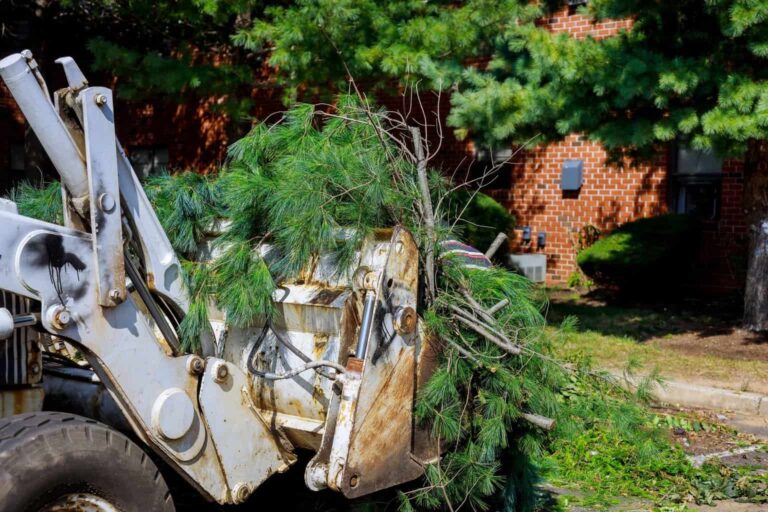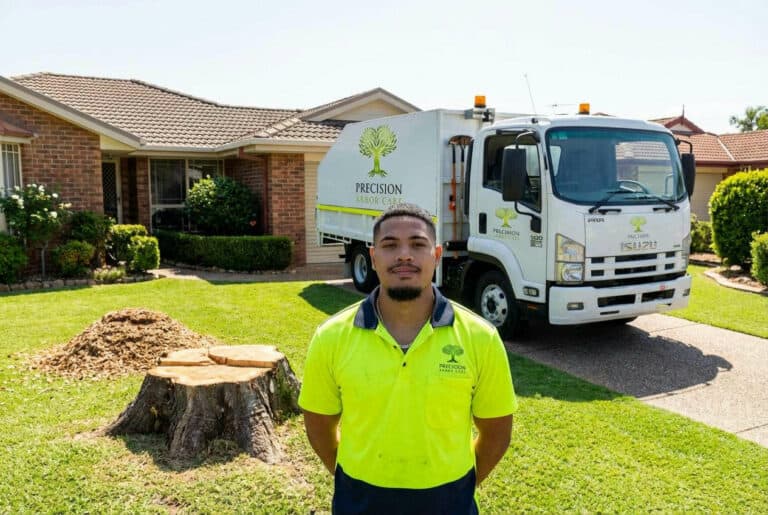
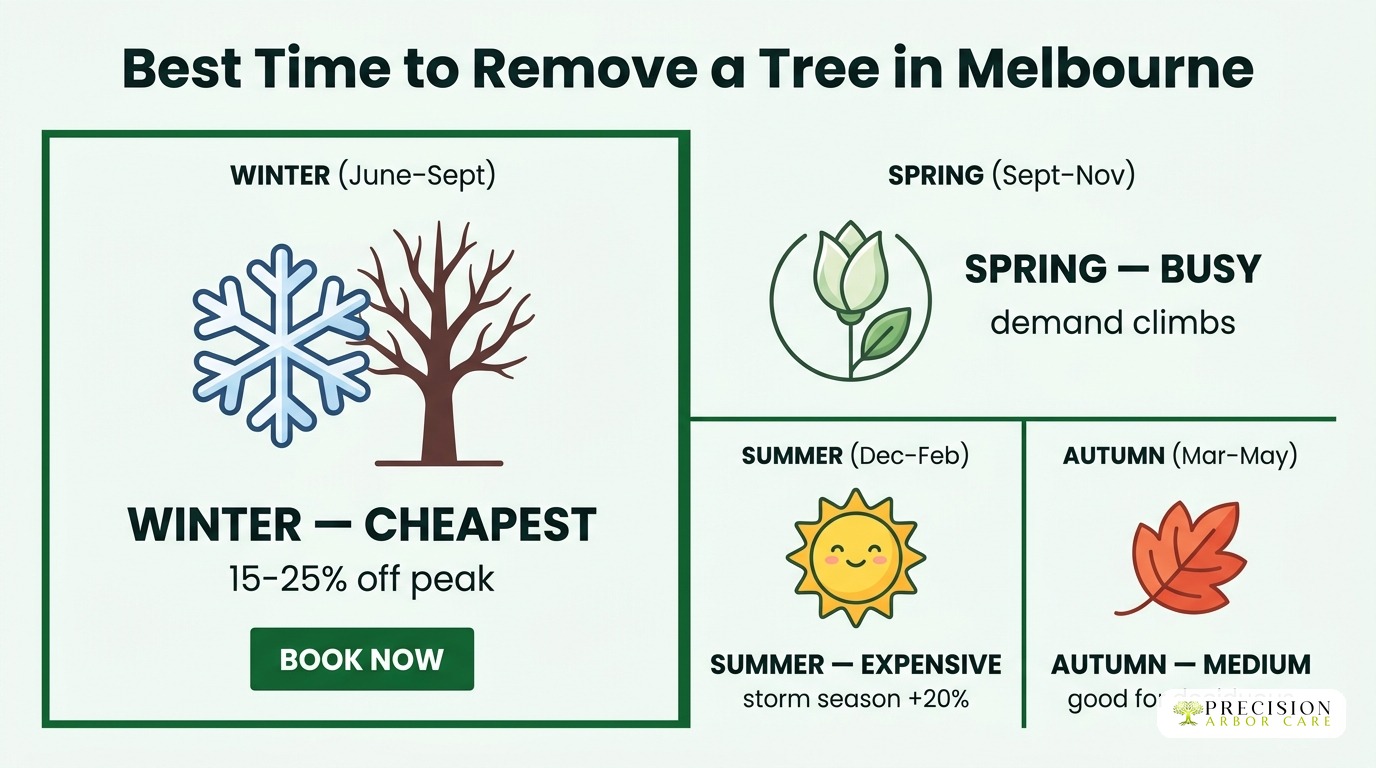
Winter is the cheapest, fastest, and least disruptive time to remove a tree in Melbourne. Here’s why timing matters more than most people realise.
Why Winter Wins
Three reasons:
- Lower demand = lower prices. Storm season (October-March) spikes emergency callouts and stretches every crew thin. Prices climb 15-25%. Winter has open schedules and competitive quotes.
- Trees are dormant. Deciduous trees have no leaves — easier to assess structure, cleaner to drop, less green waste to chip.
- Less collateral damage. Winter lawns are tougher and recover better from chipper marks. Summer lawns get scorched easily.
When You Should NOT Wait for Winter
If your tree is dead, leaning, or showing signs of root failure (visible lift, recent storm damage, cracking sounds), don’t wait. Removal cost goes up if the tree falls on its own — and your insurance often won’t cover damage to known-dead trees.
The Worst Time: Mid-Summer Storms
January and February in Melbourne combine high heat, dry conditions, and short violent storms. Demand for emergency tree removal triples, and rates climb to match. If you’ve got a borderline tree that’s been on your "maybe" list, the absolute worst time to act is the day after a storm.
Species-Specific Timing
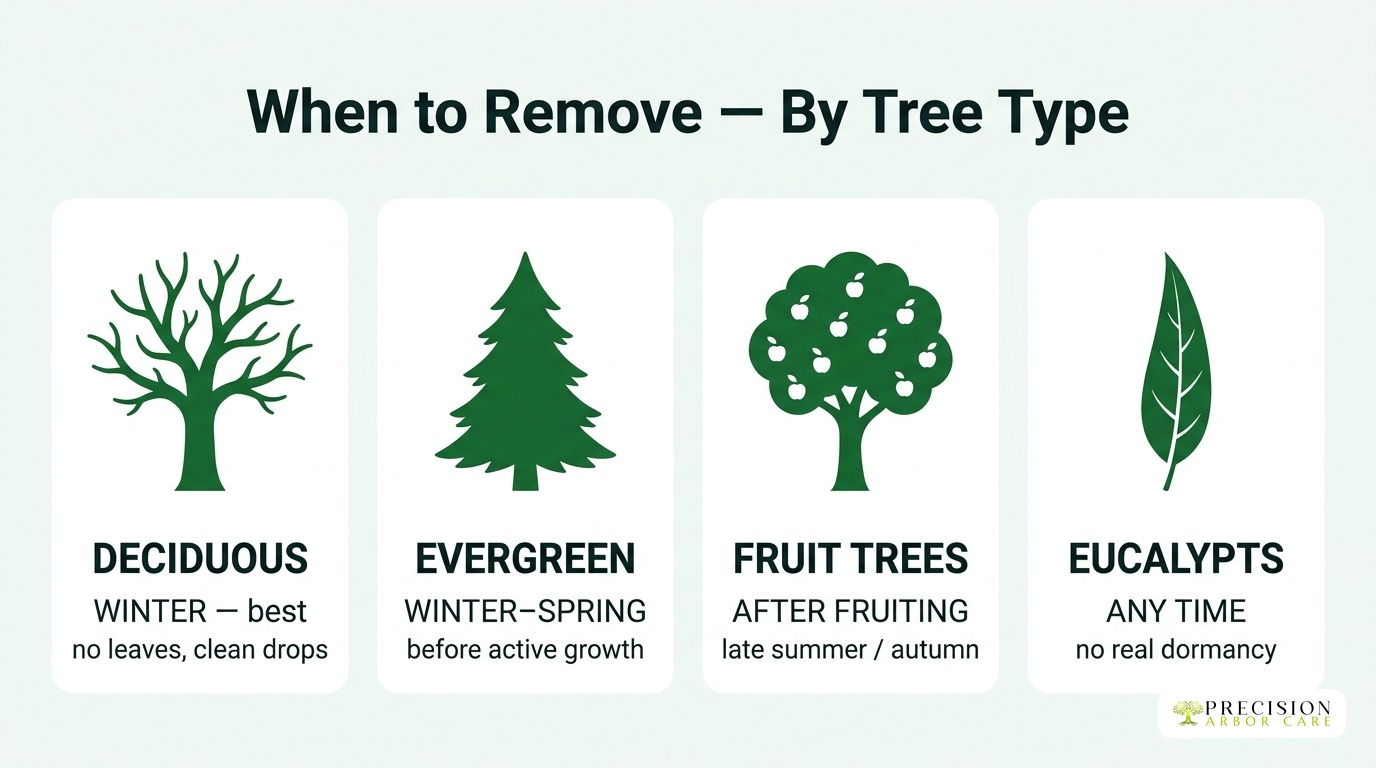
Fruit trees should be removed after fruiting (late summer to early autumn) so you don’t lose the crop. Eucalypts can go any time — they don’t have a meaningful dormant period. Pines and Cypress are easiest in cooler months because the sap is less sticky. Lemon Scented Gums are easier in winter — summer felling releases strong oil that’s sticky and messy.
Booking Lead Times
Winter bookings: usually 1-2 weeks lead time. Summer bookings: 2-4 weeks. Storm-season emergency: same day to 48 hours. For non-urgent removals, book 4-6 weeks ahead in winter to lock in the cheapest weekday slot.
Melbourne’s Storm Season Pricing Pattern
Looking at the last 3 years of Melbourne tree-removal data, the storm-season pricing surge is remarkably consistent. From mid-October to late February, prices climb 15-25% above the winter baseline. Three things drive the curve:
- Emergency callouts spike. A single Melbourne storm can generate 200-400 emergency tree calls overnight. Crews abandon planned work to clear road-blocking and roof-threat jobs first.
- Skill premium increases. Climbers who handle storm-damaged trees safely command higher rates because the work is genuinely more dangerous.
- Insurance loss ratios rise. Storm-season public liability claims spike, which feeds into operator premiums and gets passed through.
If your tree isn’t an emergency, waiting two months until winter typically saves 15-25% on the same job [1].
Why Crews Actively Want Winter Bookings
From a crew perspective, winter is the easiest season to work. Cooler weather means less heat stress in PPE, dormant deciduous trees are easier to read structurally, and lawn / garden recovery happens faster in winter dormancy than summer heat stress. Most arborist crews would rather work in 12°C and overcast than 35°C and direct sun.
That’s why winter quotes come in lower — we want to fill the calendar, the work is easier, and the customer outcomes are better. It’s a rare win-win.
What Each Season Brings to the Job
- 15-25% cheaper quotes
- 1-2 week lead times
- Dormant trees, cleaner cuts
- Easier lawn recovery
- Full schedule availability
- Council permits process faster (lower volume)
- 15-25% premium pricing
- 2-4 week lead times
- Heat stress on lawn after job
- Storm risk during long-lead bookings
- Crews stretched, harder to schedule
- Council permits take longer (peak volume)
Council Permit Timing Across the Seasons
Most Melbourne councils have a 4-8 week permit processing window for protected-tree removals. The actual processing time varies by season:
- Winter (June-Aug): Faster — council planning teams have lower volume, often 3-5 weeks for a straightforward application.
- Spring/Autumn: Standard 4-8 weeks.
- Summer (Dec-Feb): Slower — high holiday absences and peak application volume push to 6-10 weeks for straightforward cases.
If your tree needs a permit, applying in May-June for a winter job lines up beautifully — the application processes quickly, and the work happens at the cheapest time of year. Applying in December for a summer job is the slowest, most expensive path [2].
Insurance Considerations by Season
If you’ve flagged a borderline tree to your home insurer (which is worth doing for any tree leaning toward a structure or showing decay), most policies require "reasonable steps" to remove the risk. "Reasonable" almost always means before the next storm season. A tree flagged in August that you don’t remove until December may not be covered for the storm-season window in between [3].
Practical timing rule
Aim to have all known borderline trees removed by mid-September. That gets you cheaper winter pricing AND removes the insurance-gap risk during storm season. Wait until November and you pay 15-25% more and may have an insurance gap for the storms in between.
“Booked our Liquidambar removal for early July. Quote came in $400 less than the autumn quote and the crew was on site within 8 days of confirming. Couldn’t have been smoother.”
“Rob talked us out of an urgent summer removal — we waited 6 weeks for winter and saved $600. The tree wasn’t going anywhere.”
Keep reading
More tree removal guides
Ready to book or get a quote? See our tree removal cost guide for pricing or request a free quote.
Related reading
- Our Tree Removal Melbourne page — full service overview.
- Tree Removal Cost Melbourne — goes deep on the specific topic.
Related service
Tree Pruning in Melbourne
If pruning solves the problem instead of removal, you save 2/3 of the cost and keep a 20-year asset. We’ll tell you on the on-site quote whether pruning is the right call.
Frequently Asked Questions
What’s the absolute best month to remove a tree in Melbourne?
Can you remove a tree in summer?
Does timing matter for Eucalypts?
Is autumn a good time for tree removal?
Should I wait until winter if my tree is dead?
Sources
Ready when you are
Get a free, fixed tree removal quote — usually the same day
Rob calls back personally — usually the same day. We talk through the tree, book an on-site visit within 24-48 hours if it needs one, and give you a written, fixed-price quote with everything itemised. No surprises at the end.

Written by
Rob Tufuga
Founder & Lead Arborist, Precision Arbor Care
Rob has been climbing, cutting and shaping trees across Melbourne for more than 15 years. He started Precision Arbor Care to do tree work the way he always wished he could when he worked for bigger crews — one job at a time, no upselling, and an honest number on the quote.