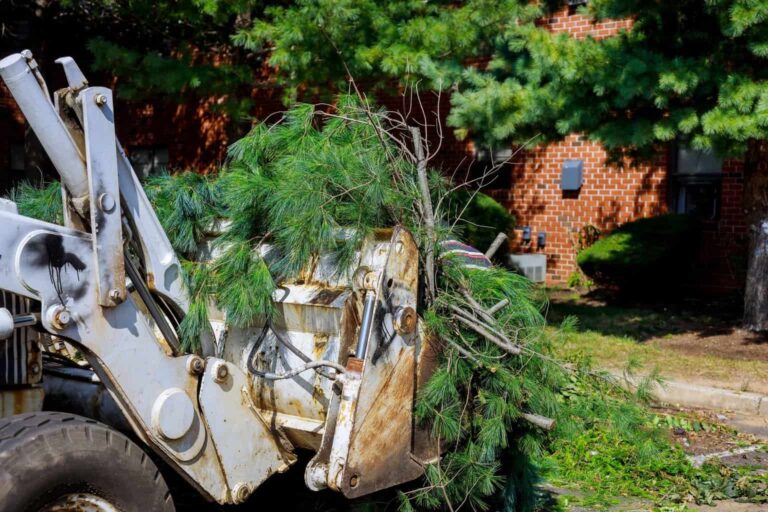
After a Melbourne storm — high wind, lightning, heavy rain on saturated ground — trees can lose limbs or fail completely. Some need an emergency response right away. Some can wait a day or two. Knowing which is which can save you a callout fee or save your house from a second failure. This guide explains what to do in the hours and days after storm damage.
First — Is the Tree Still a Danger?
Walk outside (or check from a window) and look at the tree. The first decisions are about people and property:
- Tree on a house, car, or person — call 000. After emergency services clear the scene, call us for the removal.
- Tree touching power lines — do not approach. Call your electricity distributor’s emergency line. They control whether the line can be made safe and when a tree contractor can begin.
- Large limb hanging, unsupported, ready to fall — emergency. Keep people and cars out of the strike zone and call us straight away.
- Tree leaning at a new angle, soil lifted around the base — emergency. The tree has partially failed and could come down in the next gust.
- Tree split through the main trunk — emergency. The remaining half cannot support the crown.
- Branches on the ground in your yard, no overhead damage — not an emergency. Book a normal callout.
What Power Line Contact Means
If a tree or branch is touching a power line — even a fallen line still has the potential to be live. Stay at least 10 metres clear. In Melbourne:
- AusNet Services covers north and east Melbourne — 13 17 99 for emergencies
- CitiPower / Powercor covers central and west — 13 24 12
- United Energy covers southeast suburbs — 13 20 99
Tree contractors are not permitted to work on or near live lines. The distributor either de-energises the line or sends their own crew to do the proximity work first.
What Counts as an After-Hours Emergency
For Precision Arbor Care, an after-hours emergency call-out is any of these:
- Tree on a house, vehicle, or shed
- Tree blocking a driveway, exit, or shared access path
- Large limb hanging that cannot be left until morning
- Tree leaning over a footpath, road, or fence with imminent failure risk
- Storm-felled tree blocking a road (we coordinate with council where required)
For these we mobilise within 60-90 minutes during business hours and as fast as we can after hours. There is a call-out premium on top of the removal cost.
When You Can Safely Wait
If the tree is upright, the trunk and main limbs are intact, and only smaller branches have fallen — you can wait. Book a quote during business hours. The tree gets attention within 24-72 hours typically. This saves you the after-hours premium and lets the assessment happen in better conditions.
What Insurance Usually Covers
Most home and contents policies cover storm damage to your property — including damage caused by trees. They do not usually cover the cost of removing the tree itself unless the tree fell onto an insured structure. The exact coverage depends on the policy.
Some common rules of thumb:
- Tree on the house — insurer usually covers removal of the part on the house, plus repairs
- Tree fallen but no structure hit — homeowner usually pays for removal
- Neighbour’s tree falls onto your property — your insurer usually handles the claim; neighbour’s policy may contribute if negligence applies
- Tree damaged but still standing — usually not insured unless it becomes a hazard that needs immediate removal
We provide written quotes and damage photos for insurance claims at no extra cost.
Safety Steps in the First Hour
- Account for everyone in the household
- If a structure is damaged, turn off the power at the main switch before going near the damage
- Stay clear of any line that is down or under tree contact
- Take photos from a safe distance for insurance — wide shots and close-ups
- Move vehicles away from leaning trees if it is safe to do so
- Keep children and pets indoors until the tree is assessed
What Not to Do
- Do not climb on the fallen tree or try to cut it up yourself — storm-damaged trees often have stored tension and snap unpredictably
- Do not pull branches off the roof — you can pull tiles, gutters, or sarking with them
- Do not run chainsaws in wet conditions if you are not trained
- Do not approach a tree that is still creaking, dropping branches, or visibly moving
Why Storm-Damaged Trees Are Dangerous to Work With
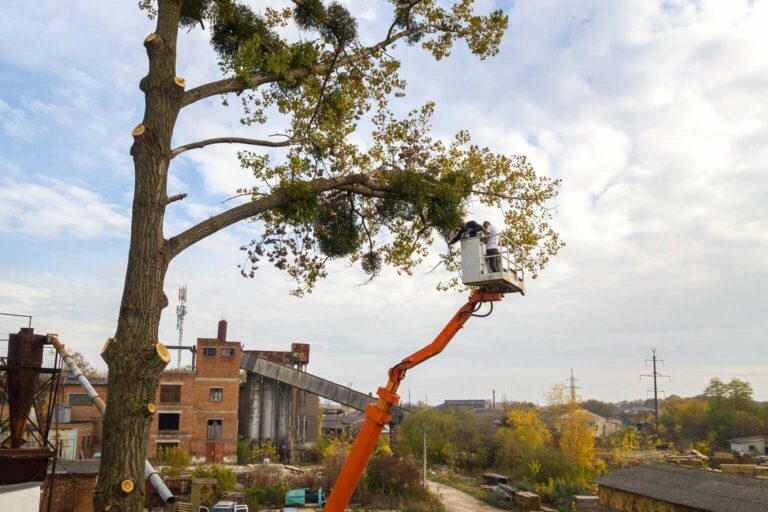
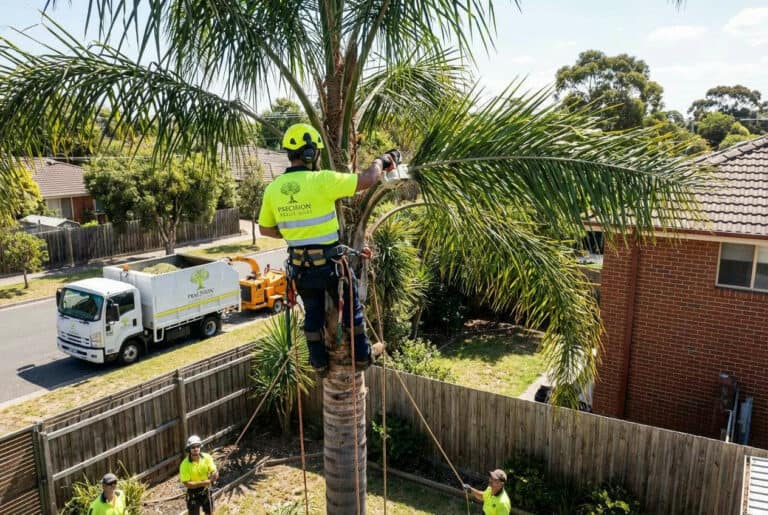
A tree that has partly failed has limbs under unpredictable load. Cutting one branch can release tension in another that whips back at chest height. Hung-up limbs can fall without warning. Even experienced arborists treat every storm tree as a hazard tree and work it section by section with controlled lowering.
After the Removal
Once a storm-damaged tree is down, decide whether to:
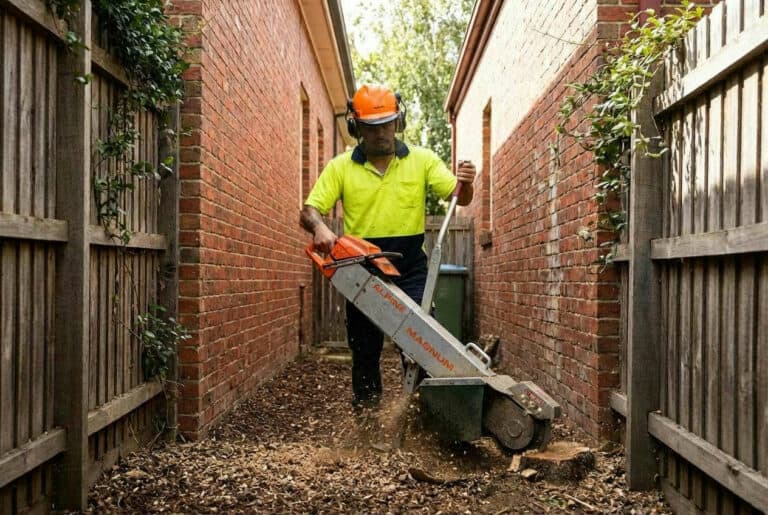
- Grind the stump and replant in spring
- Grind the stump and leave the area as garden
- Leave the stump in place (cheapest, but may regrow on some species)
For trees that survived but lost limbs, a follow-up assessment is worth doing — sometimes the remaining structure is stable, sometimes it is now unbalanced and at higher risk in the next storm.
Related Reading
For background on warning signs to watch for before a storm, see 5 signs a tree on your property is dangerous.
Get an Emergency Quote
Storm damage is not predictable but our response is. Call Rob on 0413 606 544 day or night. For non-urgent storm cleanup see our tree removal services.