Palm trees look great when they’re young and well-maintained. But once they outgrow the space, start dropping fronds onto the roof, or become a fire risk, they need to come out. The problem is that removing a palm is nothing like removing a regular tree — and the difference catches a lot of Melbourne homeowners off guard.
This guide explains why palm removal is more complex, what’s involved, and what you should expect to pay.
Why Palms Are Harder to Remove
If you’ve ever had a eucalyptus or a liquidambar removed, you might assume a palm would be easier. It’s usually not. Here’s why:
No Branches to Work With
Regular trees have branches that an arborist can remove one at a time, reducing the weight gradually from the top down. Palms don’t have branches. They have a single trunk topped by a crown of fronds. There’s no way to “piece it apart” in the same way.
The entire crown has to come off in one go, and then the trunk is sectioned from the top down. Each section is heavy, solid, and awkward to handle.
The Trunk Is Fibrous, Not Timber
A hardwood tree trunk is relatively predictable — you cut it, and it behaves like solid wood. Palm trunks are made of dense, fibrous material. They don’t split cleanly with a chainsaw. The fibres clog chainsaw chains faster, meaning more equipment wear and slower cutting.
Older palms develop extremely dense trunks that can weigh several hundred kilograms per metre. A 10-metre Canary Island Date Palm trunk can weigh over 2 tonnes.
Climbing Is More Difficult
Arborists typically climb trees using spikes and a harness, or they access the canopy via branches. Palms have no branches to climb on. The trunk is often smooth (or covered in sharp leaf stubs), and the diameter can be too wide for standard climbing spikes.
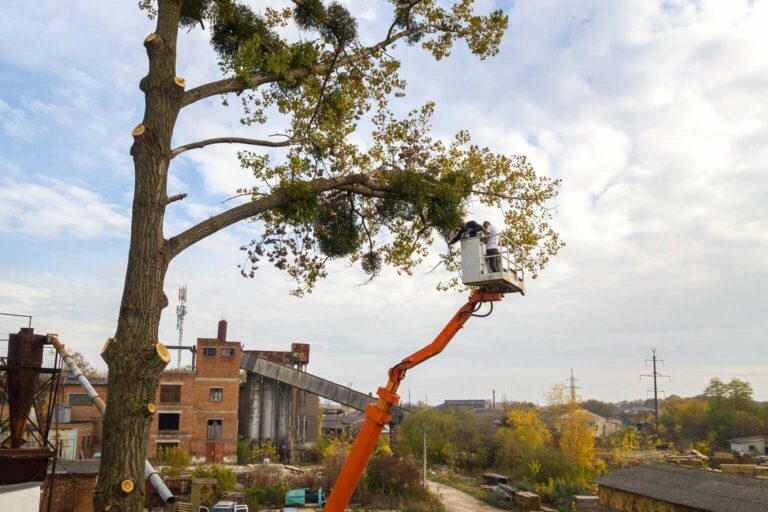
Many palm removals require an elevated work platform (cherry picker) or crane, which adds to the cost.
Frond Disposal
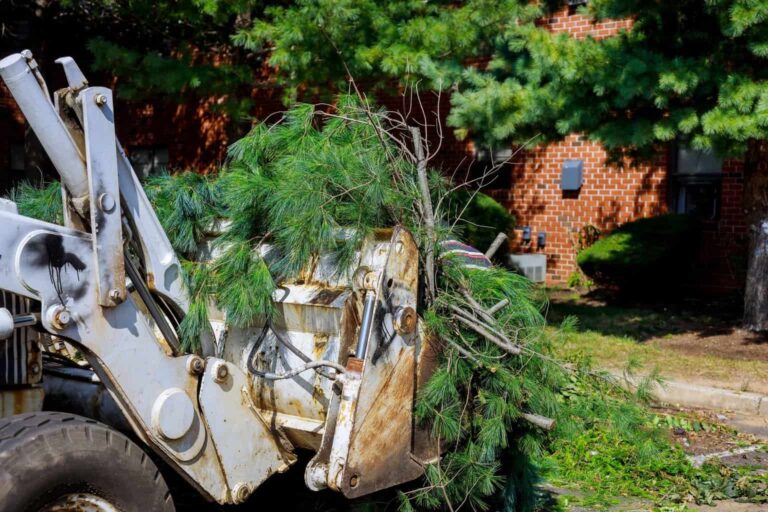
Palm fronds are bulky, awkward, and don’t chip as neatly as timber branches. They take up a lot of space on the truck and at the green waste facility. A single large palm can fill an entire trailer with fronds alone.
Common Palm Species in Melbourne
Melbourne’s climate suits several palm species. These are the ones we remove most often:
Cocos Palm (Syagrus romanzoffiana)
The most common palm in Melbourne backyards. Grows 10-15 metres tall with a relatively thin trunk. Produces clusters of orange fruit that create a mess on driveways and attract fruit bats. Cocos palms are considered an environmental weed in parts of Australia because birds spread the seeds into bushland.
Removal difficulty: Moderate. The thin trunk is easier to manage than larger species, but height is still a factor.
Canary Island Date Palm (Phoenix canariensis)
A large, heavy palm with a thick trunk covered in diamond-shaped leaf scars. Grows up to 20 metres tall. The fronds have sharp spines near the base that can cause serious puncture wounds.
Removal difficulty: High. These palms are extremely heavy. The trunk is dense and wide, and the crown can weigh over 500 kg. Crane access is often needed.
Washingtonia Palm (Washingtonia robusta)
The tall, thin palm you see lining streets and driveways. Grows up to 25 metres. Dead fronds hang below the crown in a distinctive “skirt” that becomes a fire hazard and a home for pests like rats and spiders.
Removal difficulty: High due to extreme height. These palms almost always require a cherry picker or crane.
Bangalow Palm (Archontophoenix cunninghamiana)
A slender, elegant palm that grows to around 10-15 metres. Common in sheltered, shaded gardens. Thinner trunk than most, which makes removal slightly simpler.
Removal difficulty: Low to moderate. Usually manageable with standard climbing equipment.
The Palm Removal Process
Here is how a typical palm removal job works:
Step 1: Site Assessment
An arborist inspects the palm to determine its height, trunk diameter, weight, lean, and proximity to structures, power lines, and fences. Access for machinery is assessed.
Step 2: Frond Removal
The crown of fronds is removed first. For shorter palms, an arborist climbs and cuts fronds with a handsaw or chainsaw. For taller palms, a cherry picker or EWP (elevated work platform) is used.
All fronds and fruit clusters are lowered or dropped to the ground and cleared.
Step 3: Trunk Sectioning
The trunk is cut from the top down in manageable sections — typically 1-1.5 metre lengths. Each section is lowered by rope or dropped to the ground if there’s clear space.
For very large palms (like Canary Island Date Palms), a crane may lift sections directly onto a truck.
Step 4: Stump Treatment
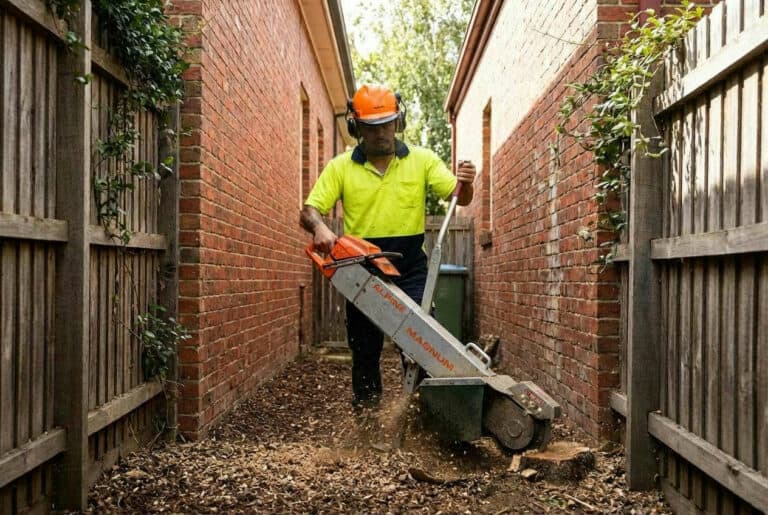
Palm stumps behave differently to hardwood stumps. The fibrous material doesn’t respond well to standard stump grinders — it shreds rather than chips. Grinding a palm stump takes longer and puts more wear on the equipment.
Some homeowners choose to leave the stump and let it decay naturally. However, palm stumps can take years to break down and may attract termites. Grinding is the cleaner option.
Step 5: Cleanup and Disposal
All debris is removed from the site. Because palm material is so bulky, disposal costs are often higher than for an equivalent-sized timber tree.
How Much Does Palm Removal Cost in Melbourne?
Palm removal generally costs more than removing a similar-sized hardwood tree. Here is a rough guide:
| Palm Type | Height | Typical Cost Range | |—|—|—| | Cocos Palm | 5-10m | $500 – $1,500 | | Cocos Palm | 10-15m | $1,500 – $3,000 | | Canary Island Date Palm | 5-10m | $2,000 – $4,000 | | Canary Island Date Palm | 10-20m | $4,000 – $8,000+ | | Washingtonia Palm | 10-20m | $2,000 – $5,000 | | Washingtonia Palm | 20m+ | $5,000 – $10,000+ |
These prices include removal and disposal. Stump grinding is usually an additional $200-$500 depending on the stump size.
Costs increase when:
- Crane hire is needed (adds $500-$2,000+ depending on the crane size and duration)
- Access is restricted (narrow side gates, rear yards with no vehicle access)
- Power lines are nearby (may require a power line clearance from the electricity distributor)
- Multiple palms are removed at once (bulk pricing may apply)
Do You Need a Permit to Remove a Palm?
In most Melbourne council areas, you need a permit to remove any tree (including palms) above a certain size — typically if the trunk diameter is 100mm or more at chest height. Some councils measure differently, so check with your local planning department.
Cocos palms are sometimes exempt from permit requirements because they are classified as an environmental weed. But don’t assume — always confirm with your council before removal begins.
Get Your Palm Removed Safely
Palm removal is specialist work. The weight, height, and fibrous trunk material make it a job for experienced arborists with the right equipment.
If you’ve got a palm that needs to go, call Rob on 0413 606 544. Precision Arbor Care removes all palm species across Greater Melbourne. Rob will assess the palm, explain the process, and give you a clear quote — no surprises.