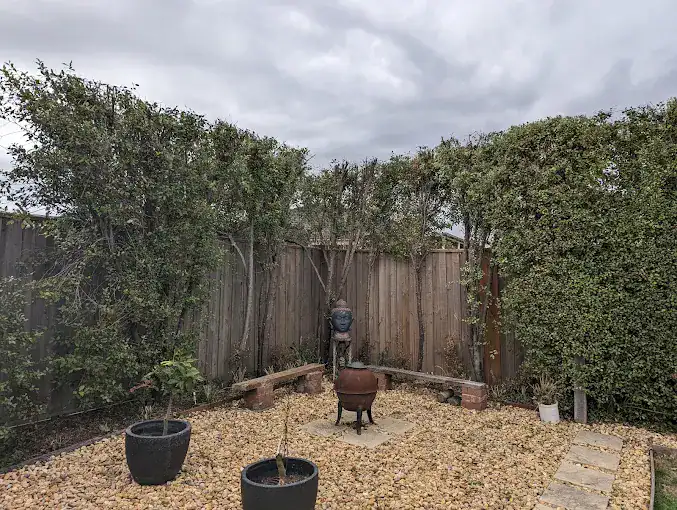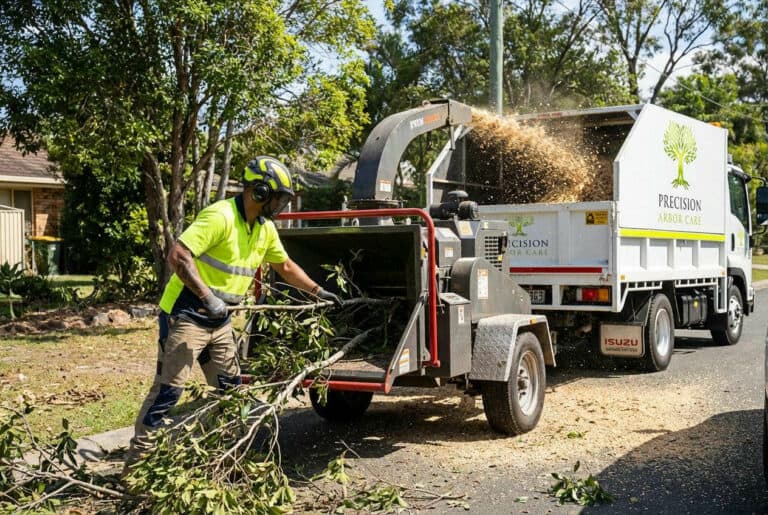
Overhanging branches from a neighbour’s tree can block sunlight, drop leaves into your gutters, and even damage your roof. But before you grab a chainsaw, you need to know what Victorian law actually allows you to do — and what could land you in serious trouble.
This guide covers your legal rights, the safest way to handle the situation, and when to call in a professional.
Your Legal Rights in Victoria
Under Victorian law, you have the right to trim branches and roots that cross your property boundary. This is called the “right of abatement.” You do not need your neighbour’s permission to trim what hangs over onto your side.
However, there are strict limits:
- You can only cut back to the boundary line — not beyond it
- You cannot enter your neighbour’s property to do the work
- You cannot damage the health of the tree
- You must return any cut branches to your neighbour (or offer to — this is a legal courtesy)
- You cannot remove the tree itself, even if most of it hangs over your fence
If the tree is covered by a council vegetation overlay or heritage listing, you may need a permit before trimming anything — even on your side. Check with your local council first.
What About Fruit Trees?
A common question. If a neighbour’s fruit tree hangs over your fence, the fruit technically belongs to your neighbour. In practice, most people don’t enforce this. But legally, the fruit is theirs.
Who Pays for the Trimming?
This is where disputes often start.
You pay if you choose to trim branches on your side. The law gives you the right to do it, but the cost is yours.
Your neighbour pays if you can show the tree is causing actual damage — cracked fences, blocked drains, roof damage. In these cases, you may be able to recover costs through negotiation or, as a last resort, through VCAT (the Victorian Civil and Administrative Tribunal).
Shared costs are common when neighbours agree to split the bill. This is the most practical outcome in most situations.
How to Handle It Without Starting a War
Tree disputes between neighbours are one of the most common sources of neighbourhood conflict in Melbourne. Here is how to handle it well:
Step 1: Talk to Your Neighbour First
Before doing anything, have a calm conversation. Most people don’t realise their tree is causing a problem. A simple chat can resolve 90% of these situations without any legal action.
Explain what the issue is — falling branches, blocked light, gutter damage — and suggest a solution. Many neighbours will offer to organise the trimming themselves.
Step 2: Put It in Writing
If a conversation doesn’t resolve it, send a polite letter or email. Outline the problem, what you’re asking for, and a reasonable timeframe (14-28 days is standard).
Keep a copy. If it ever goes to VCAT, you’ll need evidence that you tried to resolve it directly.
Step 3: Get a Professional Assessment
Hiring a qualified arborist to inspect the tree is the smartest move at this stage. An arborist can:
- Confirm whether the tree is healthy or poses a risk
- Recommend the right pruning approach
- Provide a written report that carries weight if you go to VCAT
- Do the work safely and in line with Australian Standard AS 4373
This is where Precision Arbor Care can help. A professional assessment protects both you and your neighbour by providing an independent, qualified opinion.
Step 4: Contact Your Local Council
If your neighbour refuses to act and the tree poses a genuine safety risk, contact your council. Many Melbourne councils have dispute resolution processes specifically for tree issues.
Councils can also issue notices requiring a property owner to maintain or remove a dangerous tree.
Step 5: Apply to VCAT (Last Resort)
If all else fails, you can apply to VCAT under the Neighbourhood Disputes Resolution Act 2011 (Vic). VCAT can order your neighbour to:
- Trim or remove the tree
- Pay for damage the tree has caused
- Pay your legal costs in some cases
VCAT applications cost around $65-$300 depending on the claim amount. You’ll need evidence: photos, arborist reports, written communication with your neighbour, and proof of damage.
When a Tree Is Genuinely Dangerous
Some situations go beyond a few overhanging branches. If a neighbour’s tree shows any of these signs, act quickly:
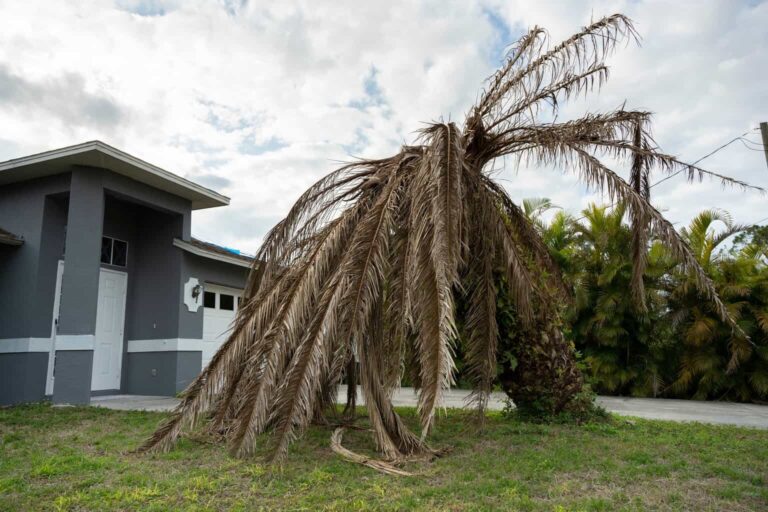
- Dead branches hanging over your property — these can fall without warning
- Trunk leaning significantly toward your house — structural failure risk
- Visible root damage to your driveway, paths, or foundations
- Large limbs cracking or splitting — storm damage waiting to happen
- Fungal growth at the base — indicates internal decay
In these cases, document the issue with photos, notify your neighbour in writing, and get an arborist report. If the tree falls and causes damage, your neighbour may be liable if they were aware of the risk and did nothing.
Why You Should Hire a Qualified Arborist
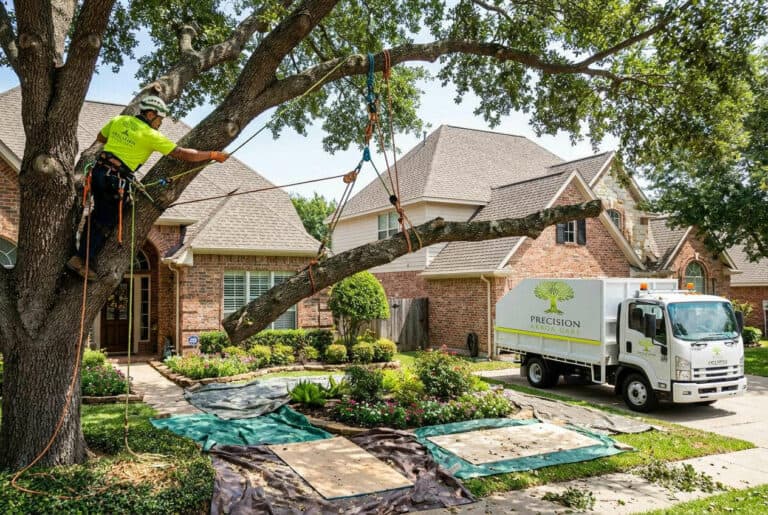
Trimming overhanging branches near a fence line is not a DIY job — especially for large trees. Here is why:
- Safety: Branches can be heavier than they look. Dropping a large limb onto a fence, shed, or power line creates bigger problems
- Tree health: Bad cuts can introduce disease or cause the tree to grow back worse. An arborist prunes to Australian Standards, which protects the tree’s long-term health
- Legal protection: If you damage a neighbour’s tree through improper pruning, you could be liable for the cost of replacing it — and mature trees can be valued at thousands of dollars
- Insurance: A qualified arborist carries public liability insurance. If something goes wrong, you’re covered
Common Mistakes to Avoid
- Poisoning the tree: This is illegal and can result in massive fines — up to $500,000 under some council planning schemes
- Cutting roots without assessment: Severing major roots can destabilise the tree, causing it to fall
- Over-pruning: Cutting more than 25% of the canopy at once can kill the tree or trigger excessive regrowth
- Ignoring council overlays: Some trees are protected regardless of the nuisance they cause. Always check before cutting
Get the Right Advice Before You Act
Neighbour tree disputes don’t have to be stressful. The right approach — a conversation, a professional assessment, and proper pruning — resolves most situations quickly and fairly.
If you’ve got an overhanging tree causing problems at your Melbourne property, give Rob a call on 0413 606 544. Precision Arbor Care provides arborist assessments, pruning, and tree removal across Greater Melbourne. Rob can inspect the tree, explain your options, and handle the work safely — so you can get it sorted without the drama.