If you have ever priced palm removal in Melbourne you have probably noticed something — a Date palm of the same height as a Cocos palm can cost more than double to remove. The reason is the trunk, the weight, the roots, and the climbing technique. This guide explains what makes Date palms and Canary Island palms harder to remove than the more common Cocos palm.
The Three Main Palm Species in Melbourne Gardens
Most palms we remove fall into three families:
- Cocos / Queen Palm (Syagrus romanzoffiana) — the most common palm in Melbourne, recognisable by its slender grey trunk and feathery green fronds. Considered an environmental weed in many areas.
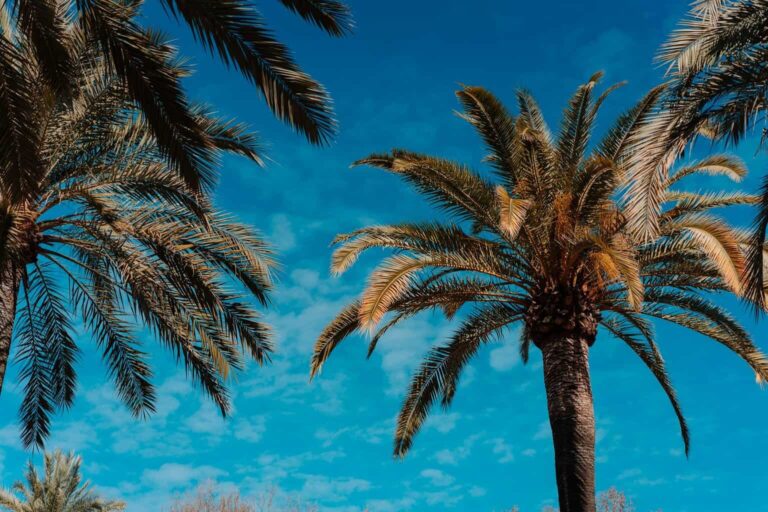
- Canary Island Date Palm (Phoenix canariensis) — the big, fat-trunked palm with the diamond-pattern bark and pineapple-shaped crown. Often found in older suburbs as a feature tree.
- True Date Palm (Phoenix dactylifera) — taller and more slender than the Canary Island, with longer fronds. Less common but found in some heritage plantings.
Why Date Palms Are Harder to Remove
Trunk Mass
A mature Canary Island Date palm trunk can weigh over 2,000kg by itself. The trunk is dense, fibrous, and saturated with water. A Cocos palm trunk of the same height usually weighs 200-400kg. That means every section we cut and lower from a Date palm is 5 to 10 times heavier.
Crown Weight
The crown of a Date palm is enormous — it can hold 80-120 fronds, each up to 4 metres long. The whole crown can weigh 500-800kg. Before we touch the trunk we have to remove every frond individually, lower it safely, and chip it. Cocos crowns are lighter and have fewer, shorter fronds.
Spines
This is the one nobody warns you about — Date palm fronds have sharp spines along the base, 5-10cm long, hardened, and arranged like nails. These spines have hospitalised arborists. Removing them requires full leather chaps, gauntlets, and a deliberate cutting sequence that exposes the climber to the spines as little as possible.
Cocos palms have no spines. Just gloves and a chainsaw.
Climbing Technique
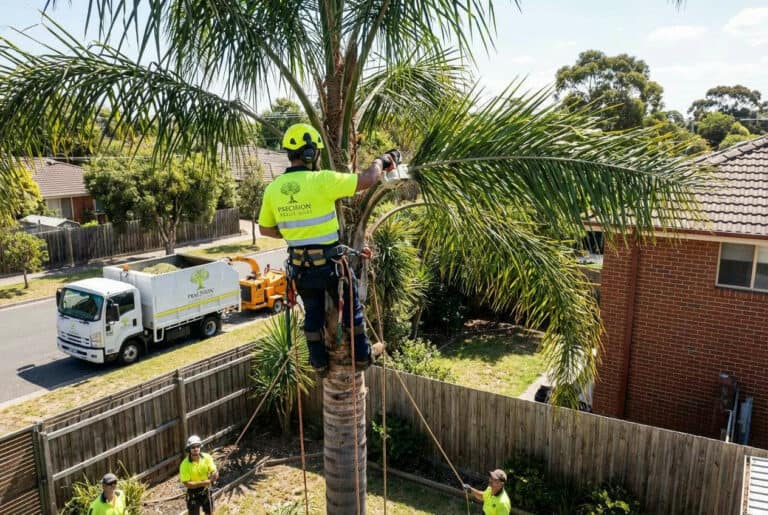
Cocos palms can be climbed with spikes because their trunks are smooth and consistent. Date palms cannot — the diamond bark snaps off in chunks when spiked, and the bark itself is what gives a climber any friction at all. Date palms are climbed with a controlled descent rig or removed by EWP or crane.
Root Ball
A Cocos palm has a fibrous, basket-shaped root system about 50cm across at the base. A Canary Island Date palm has a similar fibrous mat but it can extend 2 metres around the trunk and 1.5 metres deep. Grinding it out takes 3-4 times longer.
Cost Comparison
For a 6-metre palm in a standard backyard with reasonable access:
- Cocos Palm — typically $900 to $1,400 (removal, chipping, disposal)
- Canary Island Date Palm — typically $1,800 to $2,800
- True Date Palm — typically $1,500 to $2,400
For full cost ranges across palm sizes see our palm removal cost guide.
What About Smaller Palm Species?
Smaller palms — Kentia, Bangalow, Cordyline, Foxtail — are usually quick jobs. Most can be removed in under 90 minutes for $400-$800. The hard ones are always the Cocos at scale or anything in the Phoenix family.
What If You Just Want the Top Off?
People sometimes ask whether they can top a palm to make it smaller. The answer is no — palms grow from a single growing point at the top of the trunk. Cut that off and the palm dies. With trees you can prune; with palms you either remove them, remove the dead fronds, or leave them alone.
Permits Apply to Most Mature Palms
Whether you have a Cocos, Date, or Canary Island palm, mature specimens in inner Melbourne suburbs usually need a council permit before removal. See our guide to palm removal permits for the details.
Get a Free Palm Removal Quote
If you have a palm you want gone and you are not sure what species it is or what removal will cost, send Rob a photo. We can give an over-the-phone estimate from the photo alone for most palms. Call 0413 606 544 or learn more about our tree and palm removal services.